What is gyaru? Meaning, history and the 6 gyaru types

GYARUME EditorA former Shibuya gyaru from Japan
What does gyaru mean?
Gyaru (Japanese: ギャル) is a Japanese fashion subculture that started on the streets of Shibuya, Tokyo, in the 1990s. The word comes from the English word "gal", but in Japan, it means something much more specific: a girl who dresses boldly on purpose. Tanned or bright-looking skin, bleached or brown hair, big lashes, long nails, platform shoes, and an attitude that says, "I dress for me, not for you."
Gyaru is not just one look. It is a family of styles that grew and split into different branches over about 30 years. That is why there is no single image that answers "what is gyaru", and why people search for gyaru types, gyaru styles, and gyaru makeup separately. This article gives you a short history and then introduces the six types we use at GYARUME, so you can see where you fit.
From our editor, a former Shibuya gyaru: A gyaru is bright, tough, and has a strong sense of self. She loves what she loves and shows it through everything: her clothes, her makeup, her hair. The coolest gyaru isn't the one who worries about what people think. It's the one who expresses herself.
Where gyaru came from: Shibuya in the 1990s
In the mid-1990s, high-school girls in Shibuya started changing their school uniforms and their look: they rolled up their skirts, wore white socks loose and baggy ("loose socks"), dyed their hair brown, and tanned their skin. After school, they gathered at purikura (photo-sticker booths) and the shops inside Shibuya 109, the round department store across from the famous crossing.
The magazine egg, launched in 1995, put these girls on its cover instead of models, and the singer Namie Amuro made thin brows, brown hair, and platform boots a nationwide trend. By the late 1990s, "kogal" (high-school gyaru) was a word everyone in Japan knew.
In the 2000s, the look split in several directions. Some went for darker tans and blonder hair (the tanned "kuro gyaru" and the extreme "yamanba" and "manba" styles). Some went for pink and lace (hime gyaru). Some evolved into a more polished, grown-up style (onee gyaru). And the magazine Koakuma Ageha turned nightlife glamour into its own style (agejo). Through it all, the heart of the culture stayed the same: Shibuya 109, purikura with friends, and a refusal to look "normal".
Because this all happened during Japan's Heisei era (1989-2019), you will also see the term Heisei gyaru. For more on the era, read What Is Y2K? and What Is Heisei Gyaru?.
Gyaru today: why it is back
Gyaru never fully disappeared in Japan, but it became less visible in the 2010s. Since around 2024, it has made a comeback, and this time it is global:
- K-pop idols with Japanese members, like IVE's Rei, posted gyaru-style selfies and the gyaru peace sign, and Korean Gen Z picked it up.
- Netflix's Japanese dating show Badly in Love (2025) brought real gyaru and yankii to screens worldwide.
- TikTok gyaru makeup tutorials made "gyaru makeup" one of the fastest-growing beauty searches in English.
The new wave is more relaxed than the 2000s version. Fewer people spend two hours on their hair every morning. Instead, they add one or two gyaru elements to their everyday clothes. That is why we added a sixth type, Everyday Gyaru, to the five classic ones.
The 6 gyaru types
Fashion writers list anywhere from 5 to 15 gyaru substyles. We use six because they cover what people actually wear today, and because each one has a clear personality, not just a dress code. Take the quiz if you want to find yours in 2 minutes.
1. Hime Gyaru: the princess
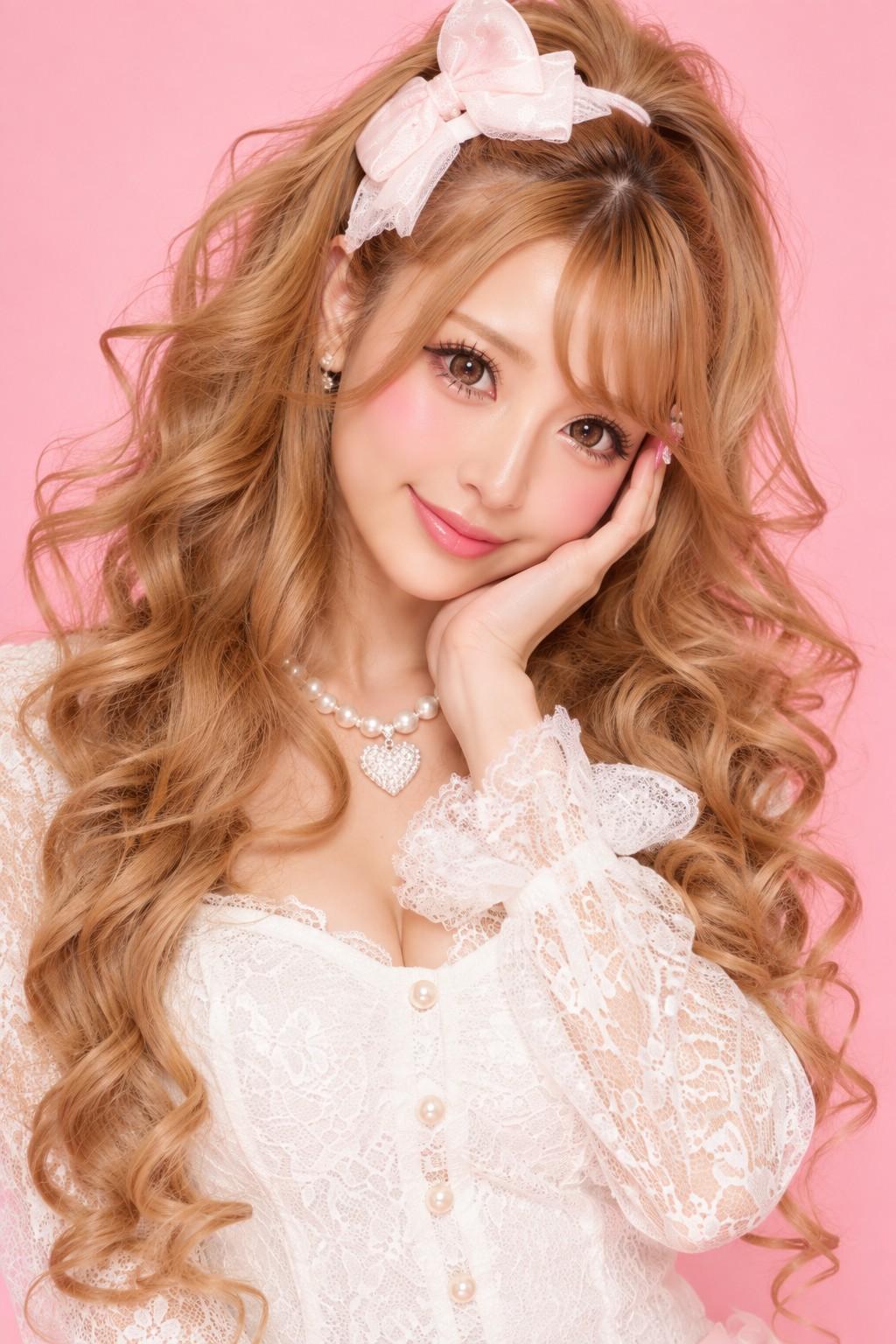
Look: big, curled hair, pink and white, lace, bows, pearls, long nails with a pink gradient. The eyes are the focus: long lower lashes and soft pink blush placed high on the cheeks.
Era: mid-to-late 2000s. The style took shape at Shibuya 109 brands like LIZ LISA and Jesus Diamante, and Koakuma Ageha pushed it to the top.
Attitude: "Being cute is my decision." Hime gyaru is not a princess waiting to be rescued. She chose the crown herself, and she does not care if you think it is too much.
Easy to try? Medium. The hair takes work, but a bow, a lace top, and pink nails already give you a hime look.
-> Hime Gyaru
2. Kogal: the original
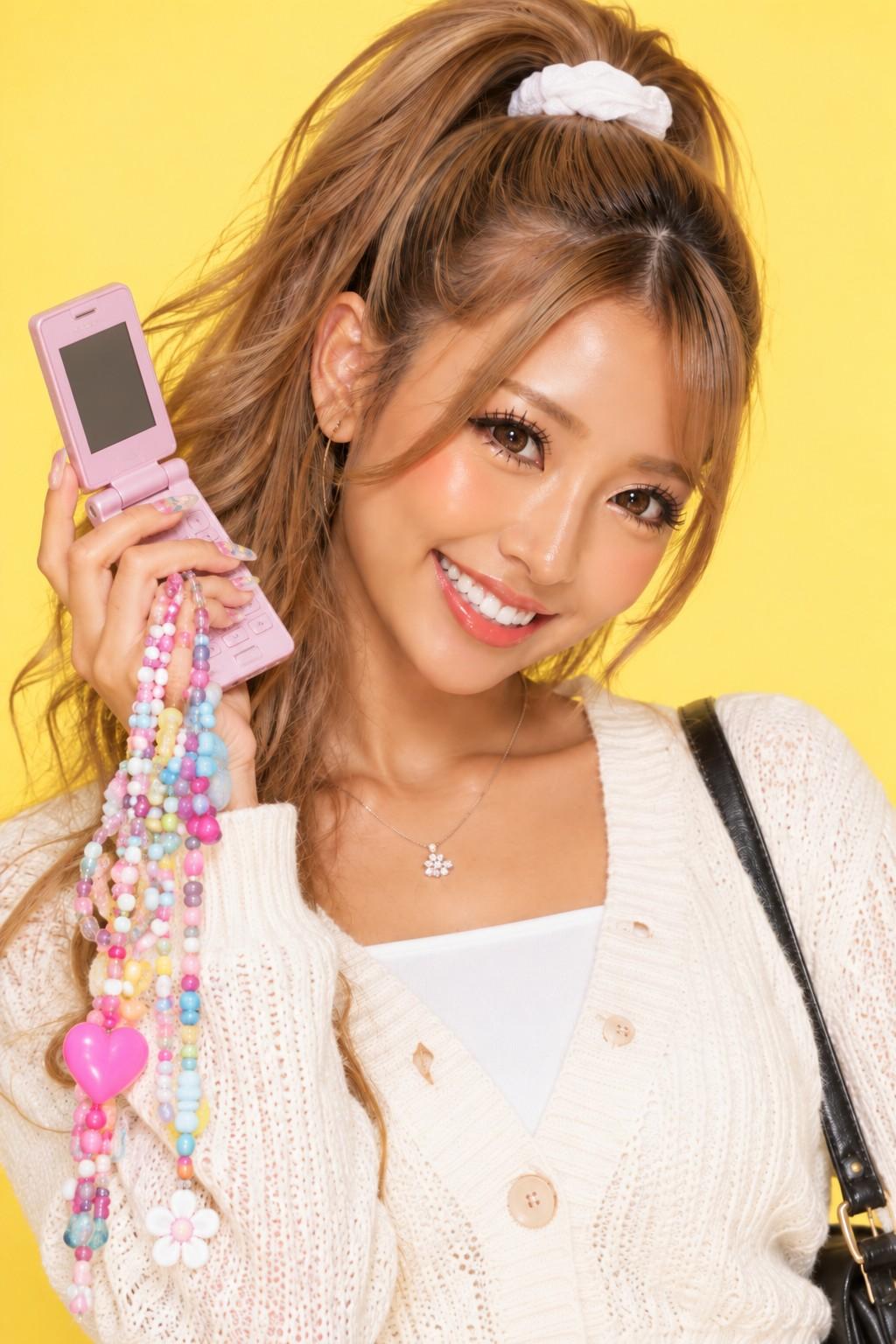
Look: shortened skirt, loose socks, platform loafers, brown ponytail, light tan, subtle makeup. A small shoulder bag and a phone covered in beaded straps.
Era: mid-1990s Shibuya. The style that started everything; egg magazine's first cover girls.
Attitude: "I am unbeatable when I am with my girls." Kogal is about the group: purikura after school, trading stickers, laughing loudly. It is less about rebellion and more about having fun your own way.
Easy to try? Easy. Loose socks, platform shoes, and a mini skirt are the whole formula. You do not need a school uniform.
-> Kogal
3. Agejo: the night glamour
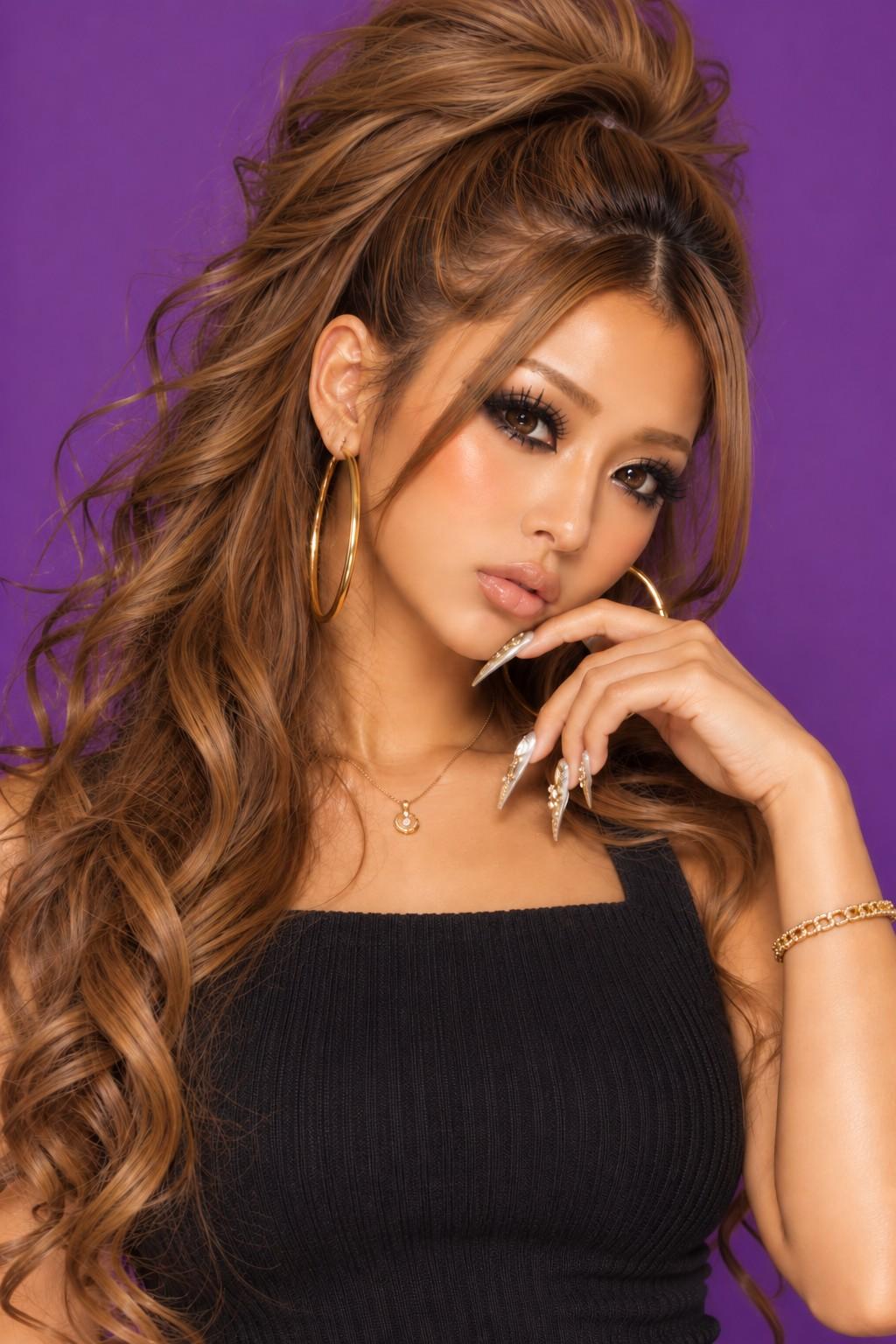
Look: huge "mori" hair (piled high and curled), black winged eyeliner around the eyes, false lashes on top and bottom, nude lips, a fitted satin dress, leopard print, very long jeweled nails.
Era: 2005 onward, from the magazine Koakuma Ageha, whose readers worked in Japan's nightlife. The makeup tutorials were so good that every gyaru copied them.
Attitude: "The night is my stage." Agejo knows she looks good and knows it took effort. Dressing up is self-respect, not a request for approval.
Easy to try? Hard. You can learn to do the lashes and liner; the hair is a project.
-> Agejo
4. Onee Gyaru: the grown-up
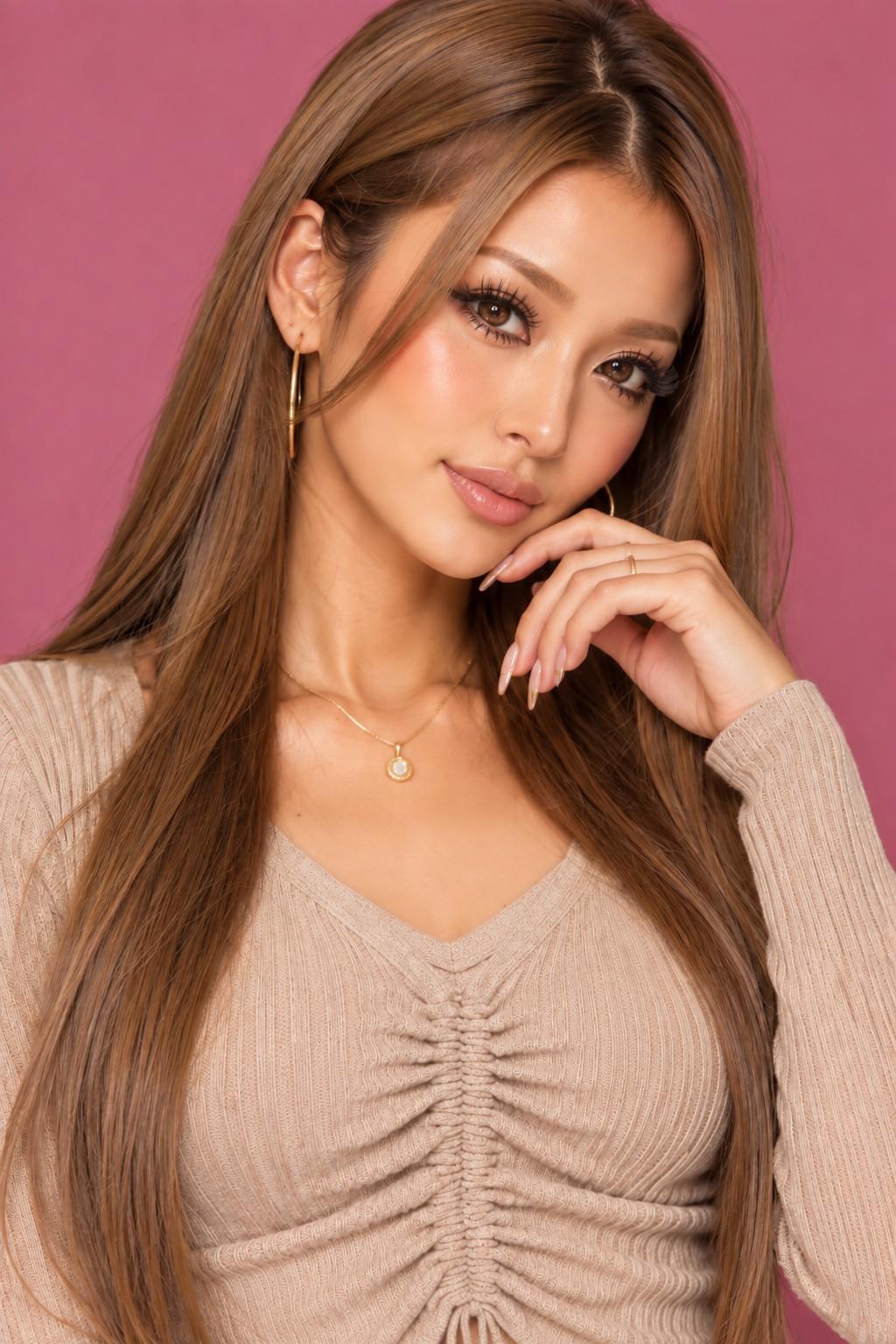
Look: clean lines, beige and black, fitted knitwear, long boots, one good bag, glossy brown hair, sharp but thin eyeliner, nude French manicures. Namie Amuro is the name most people mention.
Era: mid-2000s, when the first gyaru generation grew up. Magazines JELLY and S Cawaii! called it "adult gyaru"; 109 brands like CECIL McBEE moved in this direction.
Attitude: "I do not need to be loud to be here." Onee gyaru has nothing to prove. Maturity is not giving up gyaru; it is a quieter kind of rebellion.
Easy to try? Easy to medium. The pieces are simple; what matters is getting every detail right.
-> Onee Gyaru
5. Tsuyome Gyaru: the strong one
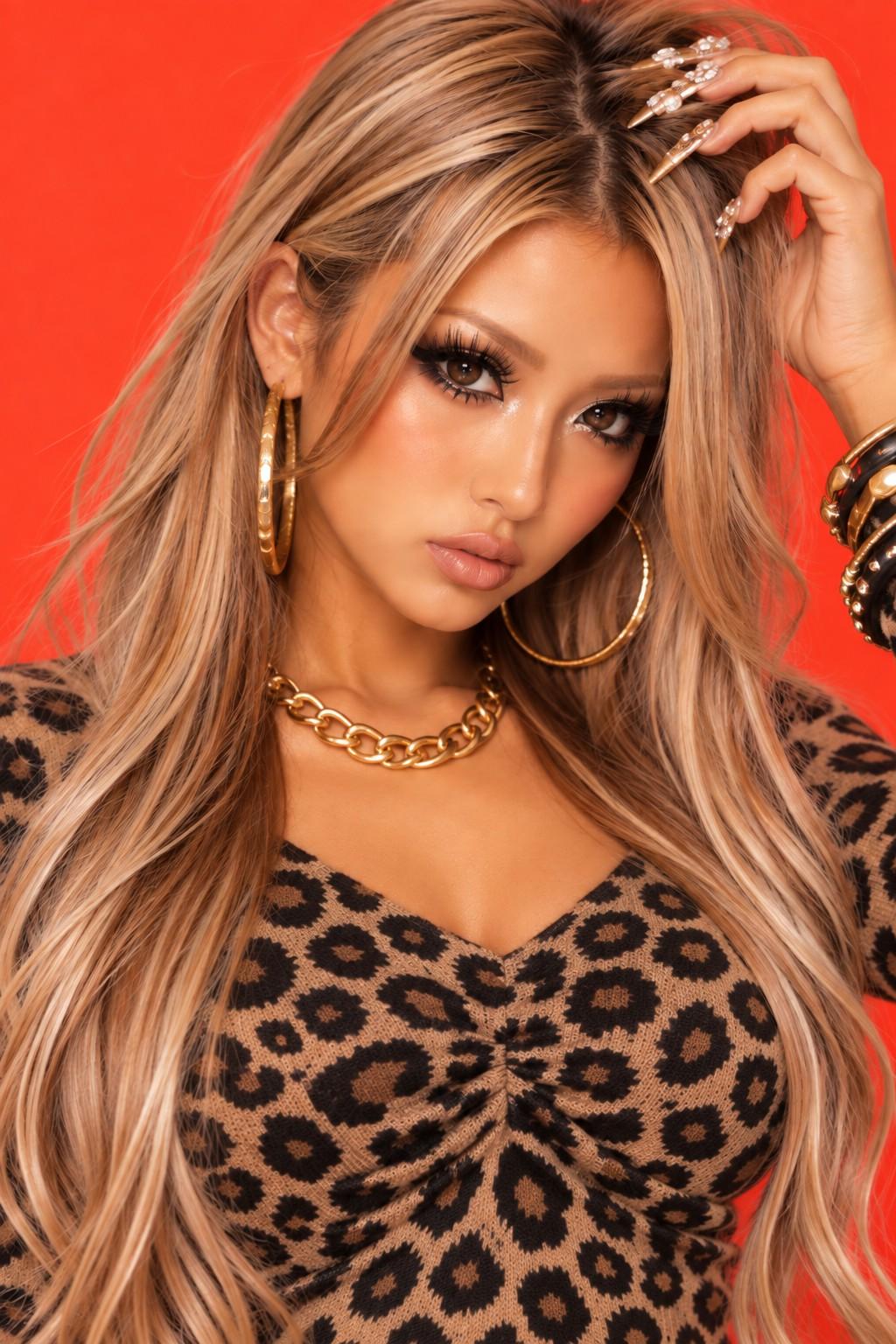
Look: deep tan, blonde or brightly colored hair, white eyeliner in the inner corners of the eyes, very thick lashes, leopard print and camo, crop tops, platform boots, rings on every finger. "Tsuyome" means "a bit stronger": stronger makeup, stronger presence.
Era: late 1990s to early 2000s, the egg generation that pushed tanning and blonde hair as far as they could go. This is the root of kuro gyaru, yamanba, and manba.
Attitude: "Why would I care what you think?" Tsuyome gyaru walks into a room, everyone turns to look, and she knows it. Too much? That is the point.
Easy to try? Hard, mostly because the tan and hair color are very different from most people's everyday look. That also makes the before-and-after especially dramatic.
6. Everyday Gyaru: a little gyaru, every day
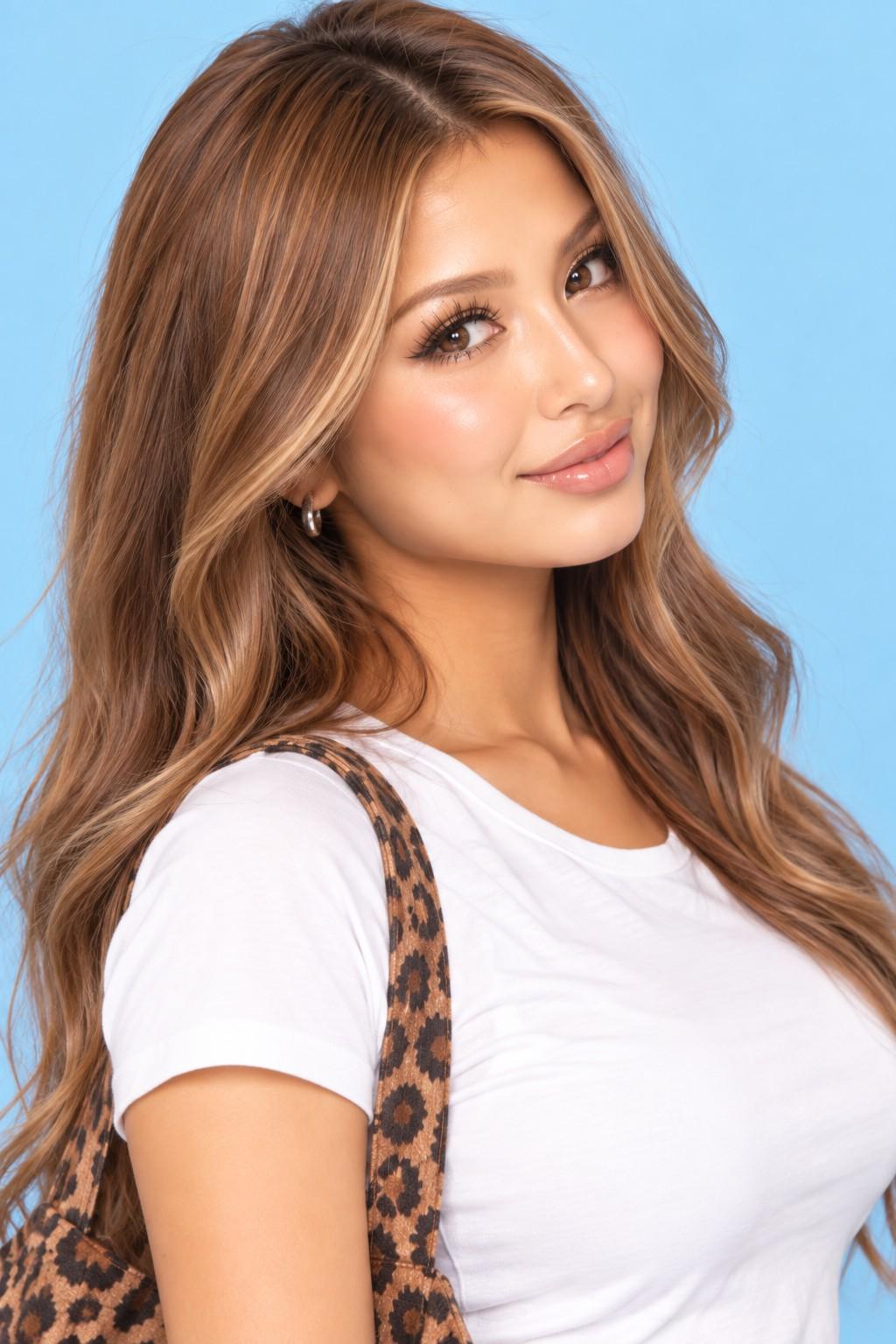
Look: your normal clothes plus one gyaru element: loose socks, a leopard-print mini bag, platform shoes, lower-lash mascara, gloss, one tiny rhinestone on a short nail.
Era: 2020s. In Korea, it is called "semi gyaru"; in Japan, you hear "neo gyaru" or "semi gyaru". This is what most people in Japan, Korea, and Taiwan are actually doing right now.
Attitude: "A little spicy is just right." You do not have to change who you are. You keep a little space in your day that is just for you.
Easy to try? Easiest. Pick one element. Done.
From our editor, a former Shibuya gyaru: I wanted to be an onee gyaru. I looked up to Yuki Yamamoto, Maya Mori, and Shizuka Muto, and I loved the magazine JELLY.
The 6 types side by side
| Type | Key look | Era | Attitude in one line | Difficulty |
|---|---|---|---|---|
| Hime Gyaru | pink, lace, bows, big curls | mid-2000s | Cute is my decision | medium |
| Kogal | loose socks, platforms, ponytail | mid-1990s | Unbeatable with my girls | easy |
| Agejo | mori hair, full liner, satin | 2005- | The night is my stage | hard |
| Onee Gyaru | beige and black, long boots, gloss | mid-2000s | I do not need to be loud | easy-medium |
| Tsuyome Gyaru | tan, blonde, leopard, white liner | late 1990s | Why would I care? | hard |
| Everyday Gyaru | one gyaru element on normal clothes | 2020s | A little spicy is just right | easiest |
From our editor, a former Shibuya gyaru: My generation grew up with JELLY and S Cawaii!, so onee gyaru was everywhere around me.
What gyaru is not
A few things people often confuse with gyaru:
- Gyaru is not a costume. It was and still is everyday wear for the people who wear it. You can wear it to school, work, or the convenience store.
- Gyaru is not the same as yankii. Yankii is Japan's delinquent subculture (think pompadours and long coats). Gyaru is a fashion and beauty culture. They overlap in attitude and sometimes in friend groups, which is why Badly in Love has both, but they are different things. See 5 Gyaru Movies and Shows.
- Gyaru is not only "tan and blonde." That is one branch (tsuyome, kuro gyaru). Hime gyaru is pale and pink; onee gyaru is beige and quiet.
- Gyaru is not a race or a nationality. It is a style anyone can wear. Gyaru communities outside Japan have existed since the 2000s.
Can I be gyaru if I am not Japanese?
Yes. Gyaru was never about where you were born. It was about choosing to look the way you want in a world that tells girls to be modest and fit in. If that sentence sounds like you, you already have the hard part.
The easiest way to start is to pick a type and add one element. The quiz asks 8 questions and tells you which of the six types fits your personality, not your face.
From our editor, a former Shibuya gyaru: It makes me so happy. I think gyaru culture is really a way of life: a woman expressing herself and being herself. And in the end, gyaru who live that way are all cheerful and full of energy.
FAQ
What does gyaru mean in Japanese?
Gyaru (ギャル) comes from the English word "gal". In Japan, it refers to a fashion subculture from 1990s Shibuya: tanned or carefully made-up skin, dyed hair, bold makeup, nails, and platform shoes, worn with a confident "I dress for me" attitude.
What are the main types of gyaru?
The classic types are kogal (1990s high-school gyaru), hime gyaru (princess style), agejo (nightlife glamour), onee gyaru (grown-up, polished), and tsuyome or kuro gyaru (tanned, blonde, bold). GYARUME adds a sixth, everyday gyaru, for the lighter 2020s version.
Is gyaru still popular?
Yes. After a quiet 2010s, gyaru made a comeback around 2024 through K-pop idols, Netflix's Badly in Love, and TikTok makeup tutorials. Searches for "gyaru" worldwide are higher in 2026 than at any point in the last five years.
Which gyaru are you?
Hime, Kogal, Agejo, Onee, Tsuyome or Everyday?
Answer 8 questions and find the Heisei gyaru type that matches your personality.
Take the quiz ♡